
Ghost Dance an Apache Tale
The first three chapters are always free

Ghost Dance
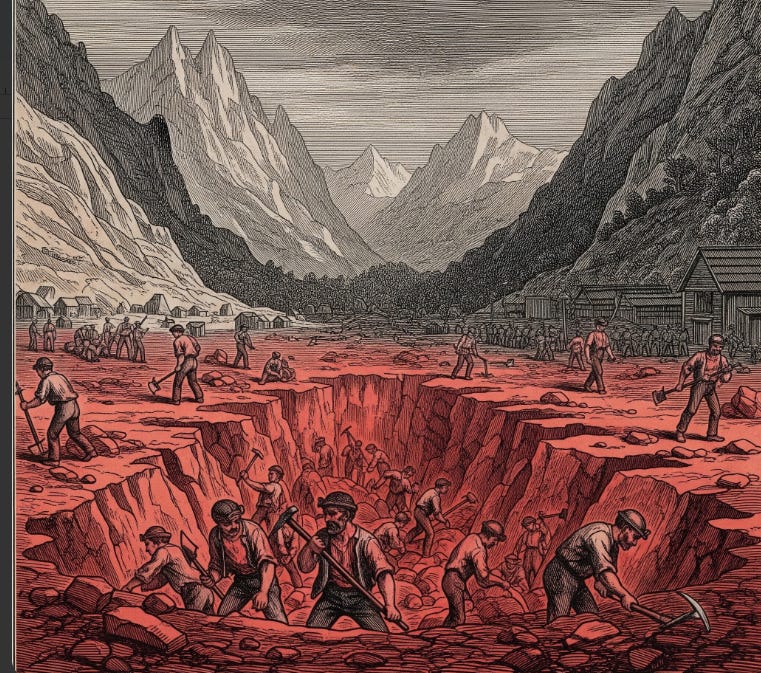
Chapter One: The Crimson Dust
The sky over the Dragoon Mountains didn’t just hold the sun; it gripped it until the horizon turned the color of a fresh bruise. Down in the basin, he earth had been torn open, a jagged red wound where the copper miners clawed at the rock till blood came out of their fingers. Dysentery was rampant in the camp, as were all the other typical melodies of the plains. And prairies and anywhere else that people who moved West contended with. There was a particularly nasty and insidious breakout of smallpox that wind combined with the dysentery put a man down in a few short and lonely days. They would deal with the dying with what they presumed was Mercy by placing them someplace where the Apaches would find him with the idea that the smallpox would go home with them. And the dust that without a doubt carried the disease didn’t just float—it owned the lungs of every man in camp, coating teeth and tongues in a grit that tasted of ancient, rusted pennies.
Carl the Butcher stood outside his shack, hacking at a slab of salt pork that looked more like a piece of weathered wood and tasted like maggots and old shit. The rhythm of his cleaver was the only steady thing in a town built on fever dreams. He wiped a hand across his forehead, leaving a streak of red clay behind.
“Oi, Danny! Stop gawkin’ at the ridge and get these scraps to the dogs,” Carl barked, not lookin’ up. “Me boots are sinkin’ into the muck and I ain’t in the mood for lollygaggin’. Move it, or I’ll be findin’ a use for your hide on the dryin’ rack.”
Carl was an old man of the sea, a London fireplug of a man no more than 5 ft 2 in tall, but not a man to be Tangled with under any circumstances. He gambled like a cheap drunk and always lost any money that he made before he even had it. He was born in the depths of the East End of London and bore a thick Cockney accent to prove it. He spoke in a ridiculous kind of manner through gritted teeth with a face that matched the ugliness of his English bulldog, Charles named of course for King Charles. Carl went by butch or butcher and was a brutal man who come from those tough streets as a gangster and had gone on the lam from London to escape his past which even followed him to New York, and thus he found himself playing at his trade hacking pigs apart or Buffalo or whatever meat came to his hand. He wouldn’t touch fish as he was a yid and considered, oddly enough, fish traife but had no problem eating swine. He was particular about his swine however, choosing only to eat the food provided by the Chinaman in the camp. He figured that if the swine was cut up into small enough pi pieces and mixed it up into noodles or chop suey it was no longer swine but Chinese food. He reasoned that fish carried awful illnesses, which was certainly true enough out in the hot plains of the West. But there you go, and as he would say, Bob is your uncle.
Upon the rim of the canyon, invisible to the men coughin’ in the pits, stood a figure wrapped in the silence of the stone. To the miners, the ridge was just a boundary of the claim; to the Apache, it was a rib of the world. Up there a warrior named No Bull looked down with a stoic seething for the white men encroaching on the sacred space below the Rib of the Earth. The air up there didn’t smell of woodsmoke or sweat. It carried the faint, electric scent of a coming change—a shift in the spirit that the white men downstairs couldn’t feel, even as it crawled up their spines.
In the center of the boomtown, the only building with a finished coat of paint and a proper shithouse behind it housed the offices of the San Pedro Mining Company. The rest of the Town had a foul sewer that ran down the middle of the main drag, spewing in to it from every tent lean to and miner’s asshole who had the gumption and stupidity to come here in the first place. The sort of desperados that showed up here we’re mostly people running away from The hangman’s noose, a shitty life or a shitty wife somewhere. About a quarter of these green horns would die within a year, and to be honest, I was no different. Yeah that’s right, I’m telling this story from hell, literally. But that’s a whole different story that’ll put down in a different book somewhere if I can just find some more paper. But this is my punishment and my torture and my absolution, it’s my confessional to the Catholic God that renounced me at birth pretty much. Also a different story to be told at a different time, but Beelzebub is generous with the paper in the pen cuz he likes to see me suffer through my memories. Don’t tell him but it’s actually a relief to get this all off my fucken chest. I hear what tell what some people get the hell out of this place. I never seen anybody get out, and I guess it’s rare, but then again I ain’t got no proof what they don’t get out. I guess this is what they used to call in Sunday school purgatory. Cuz there ain’t no heat like they used to say, and to be perfectly honest the food ain’t that bad. Yeah you still got to eat and earn a living wherever the hell it is that I am. But again all the different story that I’ll tell at some point I suppose. We will see.
Anyhow, my name is Alvin, or as that book about Waylon started, you can call me Alvin. It went something like that and he actually wrote some pretty good poems and I like to write poems and I was did. It’s a good way to get laid. Ladies love a good turn of phrase. But again I digress but first here’s one of my poems before we get back into the story.
Trapped in the middle,
Paying for his worldly sins,
Cleansing a stained soul.
The weight of the past,
A confession made with tears,
To the silent walls.
No heaven in sight,
Just the waiting in the dark,
Till the debt is paid.
A good Catholic,
Kneeling down before the truth,
Telling everything.
Through the mist he speaks,
Hoping for the final peace,
Waiting for the dawn.
Anyway, back to the story at hand or I’ll never get out of this place if indeed I can find a way. They, them quote miners unquote just wanted to not be found. And one more thing just so you know you can tell perfectly well I ain’t got the perfect vocabulary neither nor do I have good grammar or punctuation so if you find a stray comma or the bad use of a semicolon you might forgive a man for his foibles and weaknesses. But there you go, has my good friend Carl the butcher Bethlehem used to say in his Cockney way, Bob is your uncle. I don’t know what the hell that means but there you have it.
I hope you can forgive me please. I do ramble on. And let me get back to it. So these miners, all collected in one place made for a dangerous and volatile mix of dynamite, ghost farts and syphilis that just about everybody in town had from the horrors of the pussy available at Trixie’s joint.
So about witherspoon. He was a rich adventurer who was among the very first to show up here and the one that had the know-how and the skills and the college education and the chemistry set to figure out that there was copper in our hills and suspected that was probably gold deeper in and probably silver too, but the Apache line was pretty strong still back then, and that’s what the story will be about, the insidious slow murder of a nation of people that are noble and beautiful and know how to live with the world without taking from it, more giving.
The Red Man is a beautiful thing. Graceful, great horsemen and the Apaches are particularly so. Resilient to heat, resilient to any kind of undue burden or hardship, small or large, that might befall them except for the white man with their guns and booze and syphilis, and of course the pox. And like the buffalo they are now nearly gone and the West was no longer the West, but rather a graveyard where the ghost dances and the sundances in the rain dances still happen in the spirit world. And to be sure the shadow people that wear the stripes and where the tall hats that hide in the shadows are certainly real, and I suppose in part this book is a testament to my deep and abiding contrition. All this I say is predicated by the fact that I was an Indian warrior under Jack and I too got my fill of the killing of the Red Man and the and the northerner defenders of the Republic. I see now that slavery and murder and a word I just learned called genocide are the most insidious evil that mankind could perpetrate on his fellow man.
And that is all I have to say for now on that subject. So, I found myself inside Witherspoon’s office and truth be told, the air inside his offices was unnaturally, indeed unbearably still. Fire worse than the stuffiness even of my current position in wherever it is that I am. Oh here comes Beelzebub so I better get back to the storytelling and not the pontification.
Alvin speaks his truth,
With a tongue both sharp and rough,
Learned from Captain Jack.
Nautical and deep,
Mixing salt with holy prayers,
Confessing his soul.
The wrong side he fought,
Carrying a heavy heart,
Seeking for the light.
A learned man’s mind,
Using words like polished stones,
Thrown in common mud.
To the priest he turns,
Bearing all his secret sins,
Telling every bit.
And one other thing, I just randomly write poems down like I said, cuz old Mr B over there who’s looking over my shoulder likes to see me write at the poems what he says he takes credit for. Which is certainly true, ain’t it Mr B? Oh he is in the mood today.
Witherspoon sat behind a desk of polished mahogany that had traveled three thousand miles to be here. He was currently staring at a map where the red ink of the “indigenous zones” bled into the blue ink of the “mineral rights.” He adjusted his spectacles, the glass catching the dying light of the afternoon.
“The logistics are undeniable,” Witherspoon murmured to the empty room. “If we shift the perimeter of the northern shaft by a mere five hundred yards, the output increases by thirty percent. The fact that it encroaches upon a designated sacred site is a topographical inconvenience, nothing more.”
He dipped his pen into the inkwell and made a sharp, decisive mark on the vellum.
“Precisely so,” he whispered, the words crisp as a new banknote.
Outside, the first drumbeat of the Rain Dance began—a low, thrumming vibration that seemed to come from the belly of the earth rather than a physical instrument. It was a sound that made the ink in Witherspoon’s well ripple, though he didn’t bother to look down.
Alvin (who be me (cuz I’m writing this for posterity (so when I die they can cut this down to a journal but a book that people will read so I told the story in third person))) sat by the communal well, his back to the bustle of the miners. He watched a beetle struggle to climb a blade of parched grass.
“Waking up, the mountain is,” Alvin said to the beetle. “Thirsty for more than water, the red dust remains. Coming, the heavy clouds are, but different, the rain will be.” And see that there? How many talks with the weird backwards kind of way which is cuz I come from German Jewish stock where we talk in a weird way before Mr B sent me right which was no picnic let me tell you.
A wagon train creaked into the square, the oxen blowing in exhaustion. At the head of the lead wagon, Captain Jack pulled on the reins, his knuckles white. Captain Jack was a veteran of the Indian wars under Jackson in the 40s and had obtained his captaincy while in the service of the Confederacy, but had of late renounced that backward belief and come under the wing of the Lincoln mindset. He was an abolitionist to the core, having had his fill of killing people who didn’t have white skin. He looked at the red haze hanging over the town and felt a stuttering in his chest that had nothing to do with his speech.
“B-b-belay the evening camp,” Jack called out, his voice cracking the dry air. “We drop anchor h-h-here. Step lively thar! We’re in the mouth of the furnace now.” And what else about all the extra free words here is that I got to fill 100,000 pages for Mr B before he lets me go whether that’s to hell or not I don’t know. It depends on whether he likes the book. But no one would read a book that was 100,000 pages long so that’s why I’m writing down everything I’m going to say cuz people will read a book that’s 100,000 words.
Captain Jack had led the crew of one of the very earliest steam-driven warships, a ship called Old Ironsides for no better reason than it had iron planks that had been haphazardly foisted onto what had been once a ship that was driven by wind and blood and the sweat of men. Such were the times. The new world was quickly replacing the old. Some people said that since the revolutionary war and the advent of the steam engine but the population of the world had gone from something less than 350 million people to now maybe maybe as many as a billion, a number incomprehensible to any sane person. And God knows what the future held in store. It made perfect sense. Suddenly people could live anywhere and get anywhere and food could get anywhere and be shipped from anywhere. Anywhere anywhere anywhere. Mother fucker.
He hopped down, his boots hittin’ the red dirt with a thud that felt like a closing door. Behind him, the “passersby” of the trail—the tired, the broken, and the greedy—spilled out into the crimson dust, oblivious to the fact that they were walking onto a stage where the spirits were already taking their seats.
Gester the Guesser leaned against a hitching post, tossing a tarnished nickel into the air. He caught it and pressed it to his eye like a monocle, looking at the newcomers. Guster or Gester, a gnomic like imp of a man, shorter even than Jack, likely due to his upbringing close to a Mercury mine the doc said, was the telegraph operator, the first one to make it that far west and that far south. It was a magical thing to learn of the pending arrival of the various celebrity millionaires who were arriving by the day with the hopes of grabbing up parcels of the valuable land. There were rumors even that a spur from the Southern Pacific rail line would soon be coming to town. There were no promises, which were just as thin as the promises that the territory would soon be a state. Pipe dreams as smokey as the opium the Chinaman sold for a dollar in his store.
“Fresh meat for the grinder!” Gester chirped, a grin cutting through the dust on his face. “Hey, Captain! You want a tip? Don’t sleep with your mouth open. The dust in this town likes to plant seeds in your throat, and by morning, you’ll be spittin’ copper wire! Ha! A nickel for the warning, or a dime if you want me to tell ya which way the wind is gonna blow tomorrow.”
Gester the guesser– now there was a character. A real meshug as he would say. Which means crazy and Jewish. He grew up in some New York s*** hole called five points and I’ve been there so I know that it’s a s*** hole just as bad as any place out here probably worse. When you put that many people concentrated together black and white and what have you polish Irish German everywhere in the world you get more Dynamite and the day didn’t go by there when at least two or three people weren’t murdered or worse he had a funny way of talking cuz, well because he was a funny guy. You have this way of talking and said he used to do schtick on the stage at one of the lesser theaters in the city. He was smart as a whip and always need is a pin no matter how filthy things got. He was always combobulated and sheveled, which are words that don’t exist but should. Combobulated means having your s*** together and shoveled means you have your clothing looking sharp as a tack. To look at the razor shop lapels on his jacket which was it always spotless and of the latest fashion in this hell hole you think that he could shave with his shirt collar. So practically everything that came out of his mouth was a joke of some kind. He was one of those old yahoodies what spoke as much Yiddish as he spoke English and now I know you just a little bit too and if I seem like I’m given to talking like that from time to time, meh, oy gavultz me mishpoken. Such is love and life out here on the plains where the deer and the antelope die.
Back to business. More writin’ and less mumbo jumbo.
The drumbeat on the ridge grew louder, a heartbeat for a land that was tired of being bled. The Rain Dance had begun, and the first act was written in the clouds. And No Bull Sleeping” (known as Noble Sleepy (by the illiterate bigots in the camp, which is practically all of them)). had fallen into the trance of dancing under the sun for days on end, taking nothing for a repast, nor sleeping, and taking only small amounts of water when seated in his little barricade of string and bags of tobacco and colorful flags, trophies taken from the early settlers.
Author’s note: I should let you know that I’m looking down at you right now from the year on Earth which is the year of our Lord 1977, and let me tell you there ain’t no Lord like you see in the Bible. At least not in the new testament. He’s a lot more like Buddha or a black fella named Rastafarian or something like that. And so those beliefs are what people should be doing. Being peaceful meditating and loving one another and smoking La cucaracha. Jive as I used to call it. Mary Jane was another name it went by and it was rampant as we’re all drugs in the in the camp because it was the only way out of the sheer hell of it. So there’s a lot to get on with and I’m being Way off the Mark again as I am giving to lots of digressions as you can probably already tell but I will in the book when it gets published be only too happy to excise that stuff.
Chapter 2
The Vein of Contention
The mining camp of Desolation Creek didn’t sleep so much as it simmered like a negro cooking up a bowl of gumbo or red beabs or crawdads (and you should know one of the thing about me that I am a boy of the south, a boy of the deep South. New Orleans Louisiana. The greatest City on the planet by my reckoning. And God I do my love a good bowl of soul food. Used to go down and get muffalettas and sit by the piers watch the steamboats go by with all the negro Brothers. Back then though I was distinctly racist I loved the black boys. Noble and handsome and kind and giving. They were the backbone of the South and that’s why I went fighting because I knew that if we didn’t have slaves that things will go south so to speak real fast. But I’m sorry again Mr Sloan Geminis Beelzebub, but you did say 100,000 pages which I figured with my big fat rambling straw is about 200 words per page. Anyway, by midnight, the heat of the day remained trapped in the canyon walls, radiating off the stone like the fever of a dying man from the pox. The only light came from the flickering grease-lamps of the night shift and the distant, rhythmic orange glow of the Apache fires high on the Dragoons.
Witherspoon stood on his balcony, the silk of his robe a cool insult to the stifling air. He held a glass of amber liquid—real scotch, imported and expensive— and watched the silhouettes of the sentries pacing the perimeter.
“The efficiency of the night crew has dropped four percent since the drumming began,” Witherspoon said, not turning as his secretary, a twitchy man named Miller with a bad laudanum and opium habit, entered the room. “The men are spooked. They claim the shadows in the pits are moving against the grain of the lamps.”
“They’re superstitious, sir,” Miller stammered, clutching a stack of manifests. “The ‘Rain Dance’... they think it’s an incantation. A curse on the copper.”
Witherspoon took a slow sip, the ice clinking against the crystal. “A curse is merely an unquantifiable variable, Miller. We do not manage variables; we eliminate them. If the drumming continues to affect the bottom line, I shall have the Colonel move the encampment further into the foothills. Precisely so.”
Down in the muddy artery of the main drag, Captain Jack was struggling with a stubborn mule that refused to budge from the center of the road. The beast’s eyes were rolled back, fixed on the peaks above.
“B-b-belay that nonsense, ye stubborn bucket of glue!” Jack hissed, his boots sliding in the muck. “Step lively thar, or I’ll have Carl turn ye into Wednesday’s special!”
He stopped, his breath coming in ragged hitches. The air felt thick, charged with a static that made the hair on his arms stand up. He leaned his head against the mule’s flank and began the whisper, the words a low hum beneath the sound of the distant drums:
The mountain breathes a heavy sigh,
Beneath a dark and starless sky,
The iron sleeps within the deep,
While shadows through the valley creep,
And ancient kings their vigils keep.
He straightened up, the stutter vanished from his jaw. “Now, move, ye mangy dog. There’s a storm comin’ that don’t care about your temperament.”
Gester watched the Captain from the porch of the general store, whittling a piece of cedar into a sharp point. He didn’t look up as Alvin approached, his footsteps making no sound on the warped boards.
“A bad time to be a mule,” Gester remarked, flicking a wood shaving into the street picking his teeth with the sharp end he made. “They see what we don’t. They know the earth isn’t a bank vault you can just pick the lock on. You want fucken a tip, Alvin? The miners think they’re diggin’ for god damn wealth, really just diggin’ a hole big enough for the whole town to fall into. Ha! That first one free, seeing as you’re the only one here with a lick of Goddamn sense.”
Alvin looked past Gester, his eyes reflecting the orange flickers from the mountain.
“To the rock, the spirit speaks oy glaven,” Alvin murmured. “Listening, the white man is not, the meshug putzes. Taking the copper, they are, but the price, oy! they have not seen. Paying in blood, the miners will be, Zolst vaksn vi a tsibele, mitn kop in drerd! when the sky its debt collects.
“What the hell did you just say you dirty little Jew?”
“Ach mi mischpoken. In the ground like an onion your head should grow.”
The drumming stopped.
The silence that followed was heavier than the noise had been. It was a vacuum that sucked the breath out of the camp. In the sudden quiet, a new sound emerged—a low, melodic chanting that seemed to vibrate through the soles of everyone’s boots.
It was the Rain Dance reaching its crescendo. On the ridge, the Apache dancers moved in a circle that mirrored the path of the stars. They weren’t just asking for water; they were reminding the land who it belonged to.
Carl the Butcher stepped out of his shop, his apron stained with the day’s work. He looked up at the moon, which hung over the canyon like a pale, unblinking eye.
“Me ears be ringin’,” Carl grunted, rubbing his neck. “Like me head’s inside a brass bell. Somethin’s stirrin’ up thar, n’ it ain’t just th’ weather. You feel that, Gester?”
Gester stopped whittling. He looked at the tarnished nickel in his palm. “I feel like I’m holdin’ a winning ticket for a race that hasn’t started yet, Carl. And I’m the only one who knows the horse is dead.”
A single drop of rain fell. It didn’t land on the dust. It landed squarely on Witherspoon’s map, soaking into the red ink of the sacred site, turning the paper into a dark, spreading stain.
The Surveyor’s Chain
The morning seeped into the canyon like gray ink on a wet rag, like the blood of the Earth. The single drop of rain from the night before had been a tease, leaving the air tasting of wet metal and unkept promises.
In the center of the camp, a group of men in blue coats—Bureau of Indian Affairs agents—unfolded a heavy brass transit and a chain made of cold, linked iron. They moved with the stiff, mathematical certainty of men who believed the world could be conquered by a decimal point.
Witherspoon the Cocksucker, what the camp mostly called him by, because he was a cocksucker (both in truth and in spirit) watched them from the shade of his porch, his fingers dancing over the gold watch chain across his bloated out waistcoat. Beside him a man in a dusty frock coat, a surveyor named Higgins, whose eyes were bloodshot from the glare, stood there like a Goddamn saguaro. he was a a complete blank of a man, inscrutable with a thin cruel line for a mouth within, parched lips that were shedding skin like a snake or a lizard. What hair he had left was laying in greasy that he kept hidden underneath a wig that was too obvious to be true. He considered himself a ladies man but the only ladies that would fuck him that took gold, and only gold from him for their services.
Most of Trixie’s women wouldn’t even touch him for a $20 gold pie ce. It was that plug ugly. Whenever Chinese whores saw him coming they would hide. The only woman that would have him for less than $20 was a lady that was so completely insane but the vapors and whatnot that no man in town will touch her, not even for $20 in gold which back then was a fortune.
Mr B is asked me to go on more about that poor old ragged lady, as she is a particularly sore memory for me seeing as how she passed on. And that’s a very polite way of saying it. So let me tell you the story about Mary Jane which ends incidentally right here in this part of the story. She had once been a great beauty in an Arris in New York, but soon, what they called The vapors or the apoplexy it’s overcame her completely, and she was shipped from one asylum to the next, where even they could not keep her under any kind of constraint without copious quantities of laudanum, which was perfectly fine back then, as we didn’t know about things like addiction, but soon her habit became so powerful but the poor bitch, though now sedate, was hopelessly stuck on the junk. She would do anything to get a hands on more and sought more and more powerful forms of the drug and he’ll see landed on the black tar opium that she would melt in a little spoon she had can injected direct into her arms. Oliver veins had turned black and died and her hands withered to the point where they eventually became dangerous from infection and had to be amputated and then her feet went and slowly but surely bits of her body were carved off of her until she was just a head and a body. And this, this poor, rich wretch was finally mercifully put out of her misery in the raid upon our Town that occurred in a subsequent and I will tell you about it in a subsequent chapter. But the Ladies Man soon found himself with a complete payback, that being that his dick dropped off from the clap and from there he went slowly mad as the tiny microbes ate at his brain until he too was a madman addicted to heroin and he too lost many parts of his body due to infections and gangrene. Just desserts. Of course we fed his body to the chinaman’s pigs, as was the fate for anybody that crossed the wrong person in town.
“The line must be absolute, Higgins,” Witherspoon said, his voice as sharp as a razor’s edge. “I want the markers driven into the bedrock. If the Apache claim the spring is within their vision-lands, we simply show them the chain. Numbers do not negotiate. Numbers do not dance. Precisely so.”
Higgins spat a stream of tobacco juice into the red dirt. “They ain’t gonna like it, Mr. Witherspoon. That spring is the only reliable water between here and the Gila. If we chain it off for the steam pumps, their horses go thirsty. Thirsty horses make for restless riders,” he wheezed out with his sickening cough that sounded of a wilting bagpipe, or a hot malarial wind.
“Efficiency requires sacrifice,” Witherspoon replied, turning back toward his office. “Usually the sacrifice of others.”
Down by the corrals, Captain Jack was supervising the unloading of the supply wagons. He watched the surveyors with a look of deep-seated dread. Every time the iron chain clinked against a stone, he flinched.
“B-b-belay that hammerin’!” Jack shouted at a teamster, though his s-s-stutter was catching on his teeth again. “Step lively thar! We need these crates off-loaded before the noon heat turns the wood to t-t-tinder.”
He leaned against the heavy oak wheel of a wagon, his head bowed. The sound of the surveying chain reminded him of the shackles in the hold of a brig, a sound that trailed him like a ghost. He began to whisper, his voice a low, rhythmic thrum:
The iron binds the shifting sand,
A heavy grip upon the land,
The marks are set in stone and salt,
To bring the wandering heart to halt,
And lock the gates of spirits’ hand.
The stutter eased. He looked up and saw Alvin standing ten feet away, watching the surveyors with a stillness that was unnerving.
“Measuring the wind, they are,” Alvin said, his eyes fixed on the brass transit. “To hold the earth with a string, they try. Fools, the white men remain. Ownership, the mountain does not understand. Only the debt, it remembers.”
“They’re just doin’ their jobs, Alvin,” Jack said, though he didn’t sound like he believed it. “Trying to make a map of a place that don’t want to be mapped.”
“Creating a cage, they are,” Alvin countered. “But the tiger, inside the cage it is not. Watching from the shadows, the tiger is.”
Carl the Butcher walked past, lugging a crate of salt-cured ribs. He stopped to watch Higgins drive a wooden stake into the ground near the town’s only well.
“Hey! You’re blockin’ me delivery route with that toothpick!” Carl grunted. “Me wagons need room to turn, or me beef’s gonna be sittin’ in the sun turnin’ into leather. What’s the point of all this string and brass anyway?”
Gester the leaned out of the shadows of the livery stable, a deck of greasy cards in his hand. He flicked a card toward Carl—the Jack of Spades.
“It’s a magic trick, Carl!” Gester laughed, though there was no mirth in it. “They pull a chain across the dirt, and poof! The land that belonged to everyone suddenly belongs to the guy with the biggest hat. You want a tip? Don’t trip over that chain. It’s got a nasty habit of turning into a noose if you stand on the wrong side of the line. Ha! Fifty cents for a reading, or a nickel to know which surveyor is gonna get an arrow in his hat first.”
As the sun climbed higher, the heat began to shimmer off the brass instruments, distorting the landscape. The surveyors looked through their lenses and saw the mountains dancing in the haze, the ridges shifting and blurring as if the Dragoons were trying to shake off the very idea of being measured.
The first act was deepening. The rain had been a warning; the chain was the challenge. And up on the ridges, the Apache were no longer just dancing; they were waiting.
The Scent of Bitter Almonds
The noon sun hung overhead like a white-hot coin, melting the shadows into small, dark pools at the base of every rock. In the copper pits, the air had grown heavy and sweet—a cloying, artificial scent that clung to the back of the throat. It wasn’t the smell of woodsmoke or the dry tang of the desert; it was the smell of the deep earth being violated.
Witherspoon stood at the edge of the northern shaft, a silk handkerchief pressed to his nose. Beside him, a foreman with skin the texture of a walnut pointed into the dark maw of the earth.
“We hit a pocket, sir,” the foreman grunted. “Smells like bitter almonds. The men say it’s the breath of the mountain, tryin’ to poison ‘em for diggin’ too deep. Half the crew has walked off the line, claimin’ they heard a woman wailin’ down in the drift.”
Witherspoon didn’t blink. He looked down into the darkness, his eyes cold and analytical. “It is a geological gas pocket, nothing more. A chemical reaction to the exposure of the sulfide ore. Tell the men that if they prefer the smell of poverty to the smell of almonds, they are welcome to leave. But they will find no credit at the company store by nightfall. Precisely so.”
He turned away, the heels of his polished boots clicking a sharp, rhythmic tempo against the shale.
Down in the camp, the “passersby”—a group of Irish laborers and Chinese laundrymen—gathered around the communal pump, their faces masks of red dust and exhaustion. They spoke in hushed tones, their eyes darting toward the ridges where the Apache remained invisible but felt.
“I’m tellin’ ya, it’s a sign,” one miner whispered, his voice a rasp. “First the rain that wasn’t rain, now the smell of a funeral. We’re diggin’ our own graves and payin’ Witherspoon for the privilege.”
Carl the Butcher stood in the shade of his awning, sharpening a long, curved knife. The screech of metal on stone was the only sound in the sudden, midday lull. He looked up as Gester the Guesser sauntered over, flipping a copper slug between his knuckles.
“You smell that, Carl?” Gester asked, his grin looking more like a scar in the harsh light. “That’s the smell of a secret being told. The mountain is spillin’ its guts, and it ain’t happy about the audience. You want a tip? Don’t eat the beef today. The smell’s gotten into the meat. It’s like eatin’ a bouquet of dead flowers.”
Carl stopped sharpening. He sniffed the air, his nostrils flaring. “Me shop’s clean, Gester. But the air... it feels like it’s curdlin’. Like milk left in the sun. If that smell don’t clear, me boys won’t be able to tell the difference between a side of beef and a side of granite.”
From the edge of the camp, Alvin watched a dust devil whirl through the surveyors’ lines, knocking over a stack of cedar stakes. He didn’t move as the wind whipped his hair across his face.
“Changing, the air is,” Alvin murmured. “Warning us, the ancestors are. To touch what is hidden, a price there is. Taking the copper, they are, but the spirit of the stone, they cannot tame. Choking on the scent, the valley will be.”
High above, the Apache scouts watched the chaos below with a grim, silent satisfaction. They didn’t need to attack yet. The mountain was doing the work for them. They began to prepare for the evening’s ritual, the Sun Dance act nearing its dawn. The red dust was no longer just dirt; it was becoming a witness.
Captain Jack sat on the tongue of his lead wagon, his hands trembling as he tried to light a pipe. The match flared once, then died in the heavy, airless heat. He looked at the horizon and saw the shimmering heat waves distorting the world, making the mountains look like they were melting into the sky.
He didn’t try to speak. He just closed his eyes and felt the stuttering rhythm of the earth beneath his boots, a heartbeat that was growing faster, louder, and more demanding with every inch of copper pulled from the dark.
The Feed for the Swine
The alleyway behind Carl’s butcher shop smelled of iron, rot, and the wet, heavy musk of the hog pen. It was a dark vein in the camp’s anatomy where the “accidents” of Desolation Creek were quietly resolved. Two miners, their faces obscured by the filth of the pits, dragged a heavy canvas sack toward the gate. The sack was sodden, leaking a dark, viscous trail into the ruts.
“Watch the fuckin’ step,” one hissed, his voice a gravelly rasp. “If the Marshal sees this, it’s our necks in the hemp, not Witherspoon’s.”
“The Marshal is face-down in a bottle of rotgut at the Gem,” the other spat. “And Witherspoon don’t give a damn about a dead Chinaman or a claim-jumper as long as the copper keeps movin’. Open the gate.”
The gate creaked on rusted hinges. Inside, the pigs—massive, bristled beasts with eyes like dull marbles—began to grunt and shift in the muck. They knew the sound of the canvas. They knew the weight of the “delivery.”
Carl the Butcher stood on the back porch, leaning against a post, lighting a cigar that smelled like burning hair. He watched the miners dump the sack into the pen. The sound of the impact was dull, a wet thud that was immediately followed by the frantic, wet tearing of the swine.
“Make sure you get the boots back,” Carl called out, his voice flat. “Me boys can’t afford to waste good leather on a bunch of four-legged gluttons. And tell that cocksucker Witherspoon that if he wants me to handle any more of his ‘logistical inconveniences,’ the price of pork is goin’ up.”
The miners didn’t answer. They scrambled back into the shadows of the street, leavin’ the carnage to the darkness.
Up on the hill, the lights of the San Pedro Mining Company shimmered like a taunt. Witherspoon stood at his window, watching the movement in the alley with a telescope of polished brass. He saw the miners leave. He saw Carl close his door. He saw the world as a series of transactions, some paid in coin, some in carrion.
“A necessary cycle,” Witherspoon whispered to himself. “The waste of the few feeds the industry of the many. Precisely so.”
Down at the Gem Saloon, the air was a thick soup of tobacco smoke, cheap perfume, and the desperate swearing of men losing their week’s wages. Trixie leaned against the bar, her eyes hard as flint, watching a newcomer try to cheat at faro.
“Fucking amateur,” she muttered, her hand driftin’ toward the small derringer tucked into her corset. “Try that again and I’ll have the Chinaman sweepin’ your teeth off the floorboards before the next hand is dealt.”
Captain Jack sat in a corner booth, his hat pulled low. He wasn’t drinking. He was listening to the sounds of the camp—the swearing, the fighting, the distant, rhythmic munching of the hogs. The stutter was clawing at his throat again, a physical weight. He began to whisper, the poem a shield against the filth around him:
The city’s heart is made of stone,
And built upon the bleaching bone,
The hunger grows within the gate,
Where greed and anger lie in wait,
To feed the cold and hungry fate.
“Captain!” Gester the Guesser slid into the booth opposite him, smelling of gin and cedar. “You look like a man who just saw his grandmother’s ghost in a whorehouse. You want a tip? Don’t look behind the butcher shop. Some things are better left uncounted. Ha! Give me a nickel and I’ll tell you which of these bastards is gonna be the next course for the pigs.”
“G-g-get out of here, Gester,” Jack grunted. “Before I s-s-step lively on your head.”
“Suit yourself, Captain. But the wind is shiftin’. The Apache ain’t the only ones plannin’ a dance. The pigs are gettin’ fat, and Witherspoon is gettin’ hungry.”
The first movement of the Rain Dance was complete. The clouds were finally gathering, black and heavy, but the water they promised wouldn’t wash away the sins of Desolation Creek. It would only turn the dirt into a deeper, stickier grave.