
Ghost Dance
Chapter 1

Ghost Dance
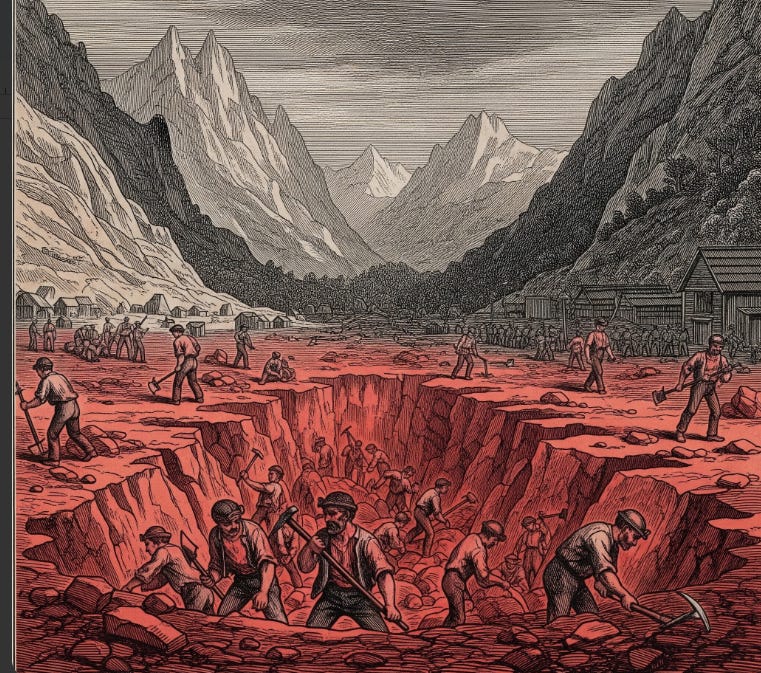
Chapter One: The Crimson Dust
The sky over the Dragoon Mountains didn’t just hold the sun; it gripped it until the horizon turned the color of a fresh bruise. Down in the basin, he earth had been torn open, a jagged red wound where the copper miners clawed at the rock till blood came out of their fingers. Dysentery was rampant in the camp, as were all the other typical melodies of the plains. And prairies and anywhere else that people who moved West contended with. There was a particularly nasty and insidious breakout of smallpox that wind combined with the dysentery put a man down in a few short and lonely days. They would deal with the dying with what they presumed was Mercy by placing them someplace where the Apaches would find him with the idea that the smallpox would go home with them. And the dust that without a doubt carried the disease didn’t just float—it owned the lungs of every man in camp, coating teeth and tongues in a grit that tasted of ancient, rusted pennies.
Carl the Butcher stood outside his shack, hacking at a slab of salt pork that looked more like a piece of weathered wood and tasted like maggots and old shit. The rhythm of his cleaver was the only steady thing in a town built on fever dreams. He wiped a hand across his forehead, leaving a streak of red clay behind.
“Oi, Danny! Stop gawkin’ at the ridge and get these scraps to the dogs,” Carl barked, not lookin’ up. “Me boots are sinkin’ into the muck and I ain’t in the mood for lollygaggin’. Move it, or I’ll be findin’ a use for your hide on the dryin’ rack.”
Carl was an old man of the sea, a London fireplug of a man no more than 5 ft 2 in tall, but not a man to be Tangled with under any circumstances. He gambled like a cheap drunk and always lost any money that he made before he even had it. He was born in the depths of the East End of London and bore a thick Cockney accent to prove it. He spoke in a ridiculous kind of manner through gritted teeth with a face that matched the ugliness of his English bulldog, Charles named of course for King Charles. Carl went by butch or butcher and was a brutal man who come from those tough streets as a gangster and had gone on the lam from London to escape his past which even followed him to New York, and thus he found himself playing at his trade hacking pigs apart or Buffalo or whatever meat came to his hand. He wouldn’t touch fish as he was a yid and considered, oddly enough, fish traife but had no problem eating swine. He was particular about his swine however, choosing only to eat the food provided by the Chinaman in the camp. He figured that if the swine was cut up into small enough pi pieces and mixed it up into noodles or chop suey it was no longer swine but Chinese food. He reasoned that fish carried awful illnesses, which was certainly true enough out in the hot plains of the West. But there you go, and as he would say, Bob is your uncle.
Upon the rim of the canyon, invisible to the men coughin’ in the pits, stood a figure wrapped in the silence of the stone. To the miners, the ridge was just a boundary of the claim; to the Apache, it was a rib of the world. Up there a warrior named No Bull looked down with a stoic seething for the white men encroaching on the sacred space below the Rib of the Earth. The air up there didn’t smell of woodsmoke or sweat. It carried the faint, electric scent of a coming change—a shift in the spirit that the white men downstairs couldn’t feel, even as it crawled up their spines.
In the center of the boomtown, the only building with a finished coat of paint and a proper shithouse behind it housed the offices of the San Pedro Mining Company. The rest of the Town had a foul sewer that ran down the middle of the main drag, spewing in to it from every tent lean to and miner’s asshole who had the gumption and stupidity to come here in the first place. The sort of desperados that showed up here we’re mostly people running away from The hangman’s noose, a shitty life or a shitty wife somewhere. About a quarter of these green horns would die within a year, and to be honest, I was no different. Yeah that’s right, I’m telling this story from hell, literally. But that’s a whole different story that’ll put down in a different book somewhere if I can just find some more paper. But this is my punishment and my torture and my absolution, it’s my confessional to the Catholic God that renounced me at birth pretty much. Also a different story to be told at a different time, but Beelzebub is generous with the paper in the pen cuz he likes to see me suffer through my memories. Don’t tell him but it’s actually a relief to get this all off my fucken chest. I hear what tell what some people get the hell out of this place. I never seen anybody get out, and I guess it’s rare, but then again I ain’t got no proof what they don’t get out. I guess this is what they used to call in Sunday school purgatory. Cuz there ain’t no heat like they used to say, and to be perfectly honest the food ain’t that bad. Yeah you still got to eat and earn a living wherever the hell it is that I am. But again all the different story that I’ll tell at some point I suppose. We will see.
Anyhow, my name is Alvin, or as that book about Waylon started, you can call me Alvin. It went something like that and he actually wrote some pretty good poems and I like to write poems and I was did. It’s a good way to get laid. Ladies love a good turn of phrase. But again I digress but first here’s one of my poems before we get back into the story.
Trapped in the middle,
Paying for his worldly sins,
Cleansing a stained soul.
The weight of the past,
A confession made with tears,
To the silent walls.
No heaven in sight,
Just the waiting in the dark,
Till the debt is paid.
A good Catholic,
Kneeling down before the truth,
Telling everything.
Through the mist he speaks,
Hoping for the final peace,
Waiting for the dawn.
Anyway, back to the story at hand or I’ll never get out of this place if indeed I can find a way. They, them quote miners unquote just wanted to not be found. And one more thing just so you know you can tell perfectly well I ain’t got the perfect vocabulary neither nor do I have good grammar or punctuation so if you find a stray comma or the bad use of a semicolon you might forgive a man for his foibles and weaknesses. But there you go, has my good friend Carl the butcher Bethlehem used to say in his Cockney way, Bob is your uncle. I don’t know what the hell that means but there you have it.
Anyway, I do ramble on. And let me get back to it. So these miners, all collected in one place made for a dangerous and volatile mix of dynamite, ghost farts and syphilis that just about everybody in town had from the horrors of the pussy available at Trixie’s joint.
So about Witherspoon. He was a rich adventurer who was among the very first to show up here and the one that had the know-how and the skills and the college education and the chemistry set to figure out that there was copper in our hills and suspected that was probably gold deeper in and probably silver too, but the Apache line was pretty strong still back then, and that’s what the story will be about, the insidious slow murder of a nation of people that are noble and beautiful and know how to live with the world without taking from it, more giving. The Red Man is a beautiful thing. Graceful, great horseman and the Apaches are particularly so. The resilient to heat the resilient to, the resilient to any kind of undo burden that might befall them except for the white man with their guns. And like the buffalo they are now nearly gone and the West was no longer the West, but rather a graveyard where the ghost dances and the sundances in the rain dances still happen in the spirit world. And to be sure the shadow people that wear the stripes and where the tall hats that hide in the shadows are certainly real, and I suppose in part this book is a testament to my deep and abiding contrition. All this I say is predicated by the fact that I was an Indian warrior under Jack and I too got my fill of the killing of the Red Man and the and the northerner defenders of the Republic. I see now that slavery and murder and a word I just learned called genocide are the most insidious evil that mankind could perpetrate on his fellow man.
And that is all I have to say for now on that subject. So, I found myself inside Witherspoon’s office and truth be told, the air inside his offices was unnaturally, indeed unbearably still. Fire worse than the stuffiness even of my current position in wherever it is that I am. Oh here comes Beelzebub so I better get back to the storytelling and not the pontification.
Alvin speaks his truth,
With a tongue both sharp and rough,
Learned from Captain Jack.
Nautical and deep,
Mixing salt with holy prayers,
Confessing his soul.
The wrong side he fought,
Carrying a heavy heart,
Seeking for the light.
A learned man’s mind,
Using words like polished stones,
Thrown in common mud.
To the priest he turns,
Bearing all his secret sins,
Telling every bit.
And one other thing, I just randomly write poems down like I said, cuz old Mr B over there who’s looking over my shoulder likes to see me write at the poems what he says he takes credit for. Which is certainly true, ain’t it Mr B? Oh he is in the mood today.
Witherspoon sat behind a desk of polished mahogany that had traveled three thousand miles to be here. He was currently staring at a map where the red ink of the “indigenous zones” bled into the blue ink of the “mineral rights.” He adjusted his spectacles, the glass catching the dying light of the afternoon.
“The logistics are undeniable,” Witherspoon murmured to the empty room. “If we shift the perimeter of the northern shaft by a mere five hundred yards, the output increases by thirty percent. The fact that it encroaches upon a designated sacred site is a topographical inconvenience, nothing more.”
He dipped his pen into the inkwell and made a sharp, decisive mark on the vellum.
“Precisely so,” he whispered, the words crisp as a new banknote.
Outside, the first drumbeat of the Rain Dance began—a low, thrumming vibration that seemed to come from the belly of the earth rather than a physical instrument. It was a sound that made the ink in Witherspoon’s well ripple, though he didn’t bother to look down.
Alvin sat by the communal well, his back to the bustle of the miners. He watched a beetle struggle to climb a blade of parched grass.
“Waking up, the mountain is,” Alvin said to the beetle. “Thirsty for more than water, the red dust remains. Coming, the heavy clouds are, but different, the rain will be.”
A wagon train creaked into the square, the oxen blowing in exhaustion. At the head of the lead wagon, Captain Jack pulled on the reins, his knuckles white. Captain Jack was a veteran of the Indian wars under Jackson in the 40s and had obtained his captaincy while in the service of the Confederacy, but had of late renounced that backward belief and come under the wing of the Lincoln mindset. He was an abolitionist to the core, having had his fill of killing people who didn’t have white skin. He looked at the red haze hanging over the town and felt a stuttering in his chest that had nothing to do with his speech.
“B-b-belay the evening camp,” Jack called out, his voice cracking the dry air. “We drop anchor h-h-here. Step lively thar! We’re in the mouth of the furnace now.”
Captain Jack had led the crew of one of the very earliest steam-driven warships, a ship called Old Ironsides for no better reason than it had iron planks that had been haphazardly foisted onto what had been once a ship that was driven by wind and blood and the sweat of men. Such were the times. The new world was quickly replacing the old. Some people said that since the revolutionary war and the advent of the steam engine but the population of the world had gone from something less than 350 million people to now maybe maybe as many as a billion, a number incomprehensible to any sane person. And God knows what the future held in store. It made perfect sense. Suddenly people could live anywhere and get anywhere and food could get anywhere and be shipped from anywhere. Anywhere anywhere anywhere. Mother fucker.
He hopped down, his boots hittin’ the red dirt with a thud that felt like a closing door. Behind him, the “passersby” of the trail—the tired, the broken, and the greedy—spilled out into the crimson dust, oblivious to the fact that they were walking onto a stage where the spirits were already taking their seats.
Gester the Guesser leaned against a hitching post, tossing a tarnished nickel into the air. He caught it and pressed it to his eye like a monocle, looking at the newcomers. Guster or Gester, a gnomic like imp of a man, shorter even than Jack, likely due to his upbringing close to a Mercury mine the doc said, was the telegraph operator, the first one to make it that far west and that far south. It was a magical thing to learn of the pending arrival of the various celebrity millionaires who were arriving by the day with the hopes of grabbing up parcels of the valuable land. There were rumors even that a spur from the Southern Pacific rail line would soon be coming to town. There were no promises, which were just as thin as the promises that the territory would soon be a state. Pipe dreams as smokey as the opium the Chinaman sold for a dollar in his store.
“Fresh meat for the grinder!” Gester chirped, a grin cutting through the dust on his face. “Hey, Captain! You want a tip? Don’t sleep with your mouth open. The dust in this town likes to plant seeds in your throat, and by morning, you’ll be spittin’ copper wire! Ha! A nickel for the warning, or a dime if you want me to tell ya which way the wind is gonna blow tomorrow.”
Gester the guesser– now there was a character. A real meshug as he would say. Which means crazy in Jewish. He grew up in some New York shit hole called five points and I’ve been there so I know that it’s a shit hole just as bad as any place out here probably worse. When you put that many people concentrated together black and white and what have you polish Irish German everywhere in the world you get more Dynamite and the day didn’t go by there when at least two or three people weren’t murdered or worse he had a funny way of talking cuz, well because he was a funny guy. You have this way of talking and said he used to do schtick on the stage at one of the lesser theaters in the city. So practically everything that came out of his mouth was a joke of some kind. He was one of those old yahoodies what spoke as much Yiddish as he spoke English and now I know you just a little bit too and if I seem like I’m given to talking like that from time to time, meh, oy gavultz me mishpoken. Such is love and life out here on the plains where the deer and the antelope die.
Back to business. More writing and less mumbo jumbo.
The drumbeat on the ridge grew louder, a heartbeat for a land that was tired of being bled. The Rain Dance had begun, and the first act was written in the clouds. And No Bull had fallen into the trance of dancing under the sun for days on end, taking nothing for a repast, nor sleeping, and taking only small amounts of water when seated in his little barricade of string and bags of tobacco and colorful flags, trophies taken from the early settlers.
The Vein of Contention
The mining camp of Desolation Creek didn’t sleep so much as it simmered like a negro cooking up a bowl of gumbo or red beans. By midnight, the heat of the day remained trapped in the canyon walls, radiating off the stone like the fever of a dying man from the pox. The only light came from the flickering grease-lamps of the night shift and the distant, rhythmic orange glow of the Apache fires high on the Dragoons.
Witherspoon stood on his balcony, the silk of his robe a cool insult to the stifling air. He held a glass of amber liquid—real scotch, imported and expensive— and watched the silhouettes of the sentries pacing the perimeter.
“The efficiency of the night crew has dropped four percent since the drumming began,” Witherspoon said, not turning as his secretary, a twitchy man named Miller with a bad laudanum and opium habit, entered the room. “The men are spooked. They claim the shadows in the pits are moving against the grain of the lamps.”
“They’re superstitious, sir,” Miller stammered, clutching a stack of manifests. “The ‘Rain Dance’... they think it’s an incantation. A curse on the copper.”
Witherspoon took a slow sip, the ice clinking against the crystal. “A curse is merely an unquantifiable variable, Miller. We do not manage variables; we eliminate them. If the drumming continues to affect the bottom line, I shall have the Colonel move the encampment further into the foothills. Precisely so.”
Down in the muddy artery of the main drag, Captain Jack was struggling with a stubborn mule that refused to budge from the center of the road. The beast’s eyes were rolled back, fixed on the peaks above.
“B-b-belay that nonsense, ye stubborn bucket of glue!” Jack hissed, his boots sliding in the muck. “Step lively thar, or I’ll have Carl turn ye into Wednesday’s special!”
He stopped, his breath coming in ragged hitches. The air felt thick, charged with a static that made the hair on his arms stand up. He leaned his head against the mule’s flank and began the whisper, the words a low hum beneath the sound of the distant drums:
The mountain breathes a heavy sigh,
Beneath a dark and starless sky,
The iron sleeps within the deep,
While shadows through the valley creep,
And ancient kings their vigils keep.
He straightened up, the stutter vanished from his jaw. “Now, move, ye mangy dog. There’s a storm comin’ that don’t care about your temperament.”
Gester the Guesser watched the Captain from the porch of the general store, whittling a piece of cedar into a sharp point. He didn’t look up as Alvin approached, his footsteps making no sound on the warped boards.
“A bad time to be a mule,” Gester remarked, flicking a wood shaving into the street. “They see what we don’t. They know the earth isn’t a bank vault you can just pick the lock on. You want a tip, Alvin? The miners think they’re diggin’ for wealth, but they’re really just diggin’ a hole big enough for the whole town to fall into. Ha! That one’s free, seeing as you’re the only one here with a lick of sense.”
Alvin looked past Gester, his eyes reflecting the orange flickers from the mountain.
“To the rock, the spirit speaks,” Alvin murmured. “Listening, the white man is not. Taking the copper, they are, but the price, they have not seen. Paying in blood, the miners will be, when the sky its debt collects.”
The drumming stopped.
The silence that followed was heavier than the noise had been. It was a vacuum that sucked the breath out of the camp. In the sudden quiet, a new sound emerged—a low, melodic chanting that seemed to vibrate through the soles of everyone’s boots.
It was the Rain Dance reaching its crescendo. On the ridge, the Apache dancers moved in a circle that mirrored the path of the stars. They weren’t just asking for water; they were reminding the land who it belonged to.
Carl the Butcher stepped out of his shop, his apron stained with the day’s work. He looked up at the moon, which hung over the canyon like a pale, unblinking eye.
“Me ears are ringin’,” Carl grunted, rubbing his neck. “Like me head’s inside a brass bell. Something’s stirrin’ up thar, and it ain’t just weather. You feel that, Gester?”
Gester stopped whittling. He looked at the tarnished nickel in his palm. “I feel like I’m holding a winning ticket for a race that hasn’t started yet, Carl. And I’m the only one who knows the horse is dead.”
A single drop of rain fell. It didn’t land on the dust. It landed squarely on Witherspoon’s map, soaking into the red ink of the sacred site, turning the paper into a dark, spreading stain.
The Surveyor’s Chain
The morning didn’t break; it just seeped into the canyon like gray ink on a wet rag. The single drop of rain from the night before had been a tease, leaving the air tasting of wet metal and unkept promises.
In the center of the camp, a group of men in blue coats—Bureau of Indian Affairs agents—unfolded a heavy brass transit and a chain made of cold, linked iron. They moved with the stiff, mathematical certainty of men who believed the world could be conquered by a decimal point.
Witherspoon watched them from the shade of his porch, his fingers dancing over the gold watch chain across his waistcoat. Beside him stood a man in a dusty frock coat, a surveyor named Higgins whose eyes were bloodshot from the glare.
“The line must be absolute, Higgins,” Witherspoon said, his voice as sharp as a razor’s edge. “I want the markers driven into the bedrock. If the Apache claim the spring is within their vision-lands, we simply show them the chain. Numbers do not negotiate. Numbers do not dance. Precisely so.”
Higgins spat a stream of tobacco juice into the red dirt. “They ain’t gonna like it, Mr. Witherspoon. That spring is the only reliable water between here and the Gila. If we chain it off for the steam pumps, their horses go thirsty. Thirsty horses make for restless riders.”
“Efficiency requires sacrifice,” Witherspoon replied, turning back toward his office. “Usually the sacrifice of others.”
Down by the corrals, Captain Jack was supervising the unloading of the supply wagons. He watched the surveyors with a look of deep-seated dread. Every time the iron chain clinked against a stone, he flinched.
“B-b-belay that hammerin’!” Jack shouted at a teamster, though his s-s-stutter was catching on his teeth again. “Step lively thar! We need these crates off-loaded before the noon heat turns the wood to t-t-tinder.”
He leaned against the heavy oak wheel of a wagon, his head bowed. The sound of the surveying chain reminded him of the shackles in the hold of a brig, a sound that trailed him like a ghost. He began to whisper, his voice a low, rhythmic thrum:
The iron binds the shifting sand,
A heavy grip upon the land,
The marks are set in stone and salt,
To bring the wandering heart to halt,
And lock the gates of spirits’ hand.
The stutter eased. He looked up and saw Alvin standing ten feet away, watching the surveyors with a stillness that was unnerving.
“Measuring the wind, they are,” Alvin said, his eyes fixed on the brass transit. “To hold the earth with a string, they try. Fools, the white men remain. Ownership, the mountain does not understand. Only the debt, it remembers.”
“They’re just doin’ their jobs, Alvin,” Jack said, though he didn’t sound like he believed it. “Trying to make a map of a place that don’t want to be mapped.”
“Creating a cage, they are,” Alvin countered. “But the tiger, inside the cage it is not. Watching from the shadows, the tiger is.”
Carl the Butcher walked past, lugging a crate of salt-cured ribs. He stopped to watch Higgins drive a wooden stake into the ground near the town’s only well.
“Hey! You’re blockin’ me delivery route with that toothpick!” Carl grunted. “Me wagons need room to turn, or me beef’s gonna be sittin’ in the sun turnin’ into leather. What’s the point of all this string and brass anyway?”
Gester the Guesser leaned out of the shadows of the livery stable, a deck of greasy cards in his hand. He flicked a card toward Carl—the Jack of Spades.
“It’s a magic trick, Carl!” Gester laughed, though there was no mirth in it. “They pull a chain across the dirt, and poof! The land that belonged to everyone suddenly belongs to the guy with the biggest hat. You want a tip? Don’t trip over that chain. It’s got a nasty habit of turning into a noose if you stand on the wrong side of the line. Ha! Fifty cents for a reading, or a nickel to know which surveyor is gonna get an arrow in his hat first.”
As the sun climbed higher, the heat began to shimmer off the brass instruments, distorting the landscape. The surveyors looked through their lenses and saw the mountains dancing in the haze, the ridges shifting and blurring as if the Dragoons were trying to shake off the very idea of being measured.
The first act was deepening. The rain had been a warning; the chain was the challenge. And up on the ridges, the Apache were no longer just dancing; they were waiting.
The Scent of Bitter Almonds
The noon sun hung overhead like a white-hot coin, melting the shadows into small, dark pools at the base of every rock. In the copper pits, the air had grown heavy and sweet—a cloying, artificial scent that clung to the back of the throat. It wasn’t the smell of woodsmoke or the dry tang of the desert; it was the smell of the deep earth being violated.
Witherspoon stood at the edge of the northern shaft, a silk handkerchief pressed to his nose. Beside him, a foreman with skin the texture of a walnut pointed into the dark maw of the earth.
“We hit a pocket, sir,” the foreman grunted. “Smells like bitter almonds. The men say it’s the breath of the mountain, tryin’ to poison ‘em for diggin’ too deep. Half the crew has walked off the line, claimin’ they heard a woman wailin’ down in the drift.”
Witherspoon didn’t blink. He looked down into the darkness, his eyes cold and analytical. “It is a geological gas pocket, nothing more. A chemical reaction to the exposure of the sulfide ore. Tell the men that if they prefer the smell of poverty to the smell of almonds, they are welcome to leave. But they will find no credit at the company store by nightfall. Precisely so.”
He turned away, the heels of his polished boots clicking a sharp, rhythmic tempo against the shale.
Down in the camp, the “passersby”—a group of Irish laborers and Chinese laundrymen—gathered around the communal pump, their faces masks of red dust and exhaustion. They spoke in hushed tones, their eyes darting toward the ridges where the Apache remained invisible but felt.
“I’m tellin’ ya, it’s a sign,” one miner whispered, his voice a rasp. “First the rain that wasn’t rain, now the smell of a funeral. We’re diggin’ our own graves and payin’ Witherspoon for the privilege.”
Carl the Butcher stood in the shade of his awning, sharpening a long, curved knife. The screech of metal on stone was the only sound in the sudden, midday lull. He looked up as Gester the Guesser sauntered over, flipping a copper slug between his knuckles.
“You smell that, Carl?” Gester asked, his grin looking more like a scar in the harsh light. “That’s the smell of a secret being told. The mountain is spillin’ its guts, and it ain’t happy about the audience. You want a tip? Don’t eat the beef today. The smell’s gotten into the meat. It’s like eatin’ a bouquet of dead flowers.”
Carl stopped sharpening. He sniffed the air, his nostrils flaring. “Me shop’s clean, Gester. But the air... it feels like it’s curdlin’. Like milk left in the sun. If that smell don’t clear, me boys won’t be able to tell the difference between a side of beef and a side of granite.”
From the edge of the camp, Alvin watched a dust devil whirl through the surveyors’ lines, knocking over a stack of cedar stakes. He didn’t move as the wind whipped his hair across his face.
“Changing, the air is,” Alvin murmured. “Warning us, the ancestors are. To touch what is hidden, a price there is. Taking the copper, they are, but the spirit of the stone, they cannot tame. Choking on the scent, the valley will be.”
High above, the Apache scouts watched the chaos below with a grim, silent satisfaction. They didn’t need to attack yet. The mountain was doing the work for them. They began to prepare for the evening’s ritual, the Sun Dance act nearing its dawn. The red dust was no longer just dirt; it was becoming a witness.
Captain Jack sat on the tongue of his lead wagon, his hands trembling as he tried to light a pipe. The match flared once, then died in the heavy, airless heat. He looked at the horizon and saw the shimmering heat waves distorting the world, making the mountains look like they were melting into the sky.
He didn’t try to speak. He just closed his eyes and felt the stuttering rhythm of the earth beneath his boots, a heartbeat that was growing faster, louder, and more demanding with every inch of copper pulled from the dark.
The Feed for the Swine
The alleyway behind Carl’s butcher shop smelled of iron, rot, and the wet, heavy musk of the hog pen. It was a dark vein in the camp’s anatomy where the “accidents” of Desolation Creek were quietly resolved. Two miners, their faces obscured by the filth of the pits, dragged a heavy canvas sack toward the gate. The sack was sodden, leaking a dark, viscous trail into the ruts.
“Watch the fuckin’ step,” one hissed, his voice a gravelly rasp. “If the Marshal sees this, it’s our necks in the hemp, not Witherspoon’s.”
“The Marshal is face-down in a bottle of rotgut at the Gem,” the other spat. “And Witherspoon don’t give a damn about a dead Chinaman or a claim-jumper as long as the copper keeps movin’. Open the gate.”
The gate creaked on rusted hinges. Inside, the pigs—massive, bristled beasts with eyes like dull marbles—began to grunt and shift in the muck. They knew the sound of the canvas. They knew the weight of the “delivery.”
Carl the Butcher stood on the back porch, leaning against a post, lighting a cigar that smelled like burning hair. He watched the miners dump the sack into the pen. The sound of the impact was dull, a wet thud that was immediately followed by the frantic, wet tearing of the swine.
“Make sure you get the boots back,” Carl called out, his voice flat. “Me boys can’t afford to waste good leather on a bunch of four-legged gluttons. And tell that cocksucker Witherspoon that if he wants me to handle any more of his ‘logistical inconveniences,’ the price of pork is goin’ up.”
The miners didn’t answer. They scrambled back into the shadows of the street, leavin’ the carnage to the darkness.
Up on the hill, the lights of the San Pedro Mining Company shimmered like a taunt. Witherspoon stood at his window, watching the movement in the alley with a telescope of polished brass. He saw the miners leave. He saw Carl close his door. He saw the world as a series of transactions, some paid in coin, some in carrion.
“A necessary cycle,” Witherspoon whispered to himself. “The waste of the few feeds the industry of the many. Precisely so.”
Down at the Gem Saloon, the air was a thick soup of tobacco smoke, cheap perfume, and the desperate swearing of men losing their week’s wages. Trixie leaned against the bar, her eyes hard as flint, watching a newcomer try to cheat at faro.
“Fucking amateur,” she muttered, her hand driftin’ toward the small derringer tucked into her corset. “Try that again and I’ll have the Chinaman sweepin’ your teeth off the floorboards before the next hand is dealt.”
Captain Jack sat in a corner booth, his hat pulled low. He wasn’t drinking. He was listening to the sounds of the camp—the swearing, the fighting, the distant, rhythmic munching of the hogs. The stutter was clawing at his throat again, a physical weight. He began to whisper, the poem a shield against the filth around him:
The city’s heart is made of stone,
And built upon the bleaching bone,
The hunger grows within the gate,
Where greed and anger lie in wait,
To feed the cold and hungry fate.
“Captain!” Gester the Guesser slid into the booth opposite him, smelling of gin and cedar. “You look like a man who just saw his grandmother’s ghost in a whorehouse. You want a tip? Don’t look behind the butcher shop. Some things are better left uncounted. Ha! Give me a nickel and I’ll tell you which of these bastards is gonna be the next course for the pigs.”
“G-g-get out of here, Gester,” Jack grunted. “Before I s-s-step lively on your head.”
“Suit yourself, Captain. But the wind is shiftin’. The Apache ain’t the only ones plannin’ a dance. The pigs are gettin’ fat, and Witherspoon is gettin’ hungry.”
The first movement of the Rain Dance was complete. The clouds were finally gathering, black and heavy, but the water they promised wouldn’t wash away the sins of Desolation Creek. It would only turn the dirt into a deeper, stickier grave.
The Shadow of the Search
The night didn’t bring any coolness to Desolation Creek; it only brought the dark. The smell of the pig pens drifted upward, mixing with the scent of cheap gin and the metallic tang of the copper drifts. Inside the Gem, the kerosene lamps flickered, casting long, jittery shadows against the walls—shadows that looked a little too much like men with bows.
Trixie slammed a bottle down in front of a sweating miner. “Drink it and shut up about the ‘red ghosts’ on the ridge. You’re paid to dig, not to piss yourself every time a coyote howls.”
“It ain’t just howlin’, Trixie,” the miner whispered, his hands shaking so hard he spilled half the glass. “They’re closer. I seen the reflection of a blade in the creek water when I went to wash. They’re just... waitin’.”
High above the camp, Witherspoon sat in his study, the embers in his fireplace glowing like the eyes of a wolf. He was drafting a letter to the Territorial Governor, his handwriting a miracle of precise, heartless calligraphy.
...and thus, the necessity of a permanent military presence cannot be overstated. The ‘Apache problem’ is no longer a matter of frontier friction; it is a direct threat to the capital interests of the San Pedro Mining Company. If the savages must be removed to ensure the flow of ore, then let it be done with the swiftness that industry demands.
“Precisely so,” he muttered, sealing the envelope with a blob of red wax that looked like a fresh wound on the paper.
Outside, the silence was suddenly shattered by a sound that made every heart in the camp skip a beat—a high, curdling shriek that ripped through the heavy air.
“Fire! The livery is up!”
The scream didn’t come from a man. It was followed by the rapid, thundering hoofbeats of unshod horses. The Apache didn’t come with a roar; they came like a shifting of the dark itself. like fucking ghosts from the very stone itself comma this heart and blood palomino's and War hot Warhammers made from the femurs of the of the Buffalo that lived all around. they faded in and out of existence quicker than you could blink.
Captain Jack sprinted out of his wagon, his boots hitting the mud just as a flaming arrow arched over the street, trailing a tail of orange sparks like a falling star. It thudded into the thatched roof of the laundry. Within seconds, the dry wood of cactus bones chaparral in pointless prayers, was screaming in the heat.
“B-b-belay the water buckets!” Jack roared, the stutter fighting him like a physical hand on his throat. “Step lively thar! To the s-s-square! Defend the women!”
trixie is getting a pussy had indeed collected themselves by the well as it was the most defensible place and should worse come to worse they could throw themselves inside to their death. No woman whatever let herself be taken alive if they could help it. and I didn't blame them. no the Red Men were perfectly justified in there lust for blood as i had watched many of my own brothers in arms do the same ever since Jackson had sent out men and put them on duty dragging i don't know how many red men and women to their death on that horrible Trail of Tears. rate for better or for eorse, and certainly worse for the women that suffered it was most certainly perhaps not justified by the fact that we did it first and far worse than they did.
He grabbed a heavy Spencer carbine from the wagon rack, his knuckles white. Across the street, he saw a shadow move with lethal grace. A young woman, the daughter of a teamster, was dragged from a porch, her scream cut short by a rough hand. Before Jack could level his sights, the riders were already turning back toward the black mouth of the canyon, the girl slumped across a pony’s mane like a sack of grain.
“They’re takin’ ‘em!” a voice wailed. “They’ve got Sarah!”
Carl the Butcher stepped out into the middle of the street, a double-barreled shotgun tucked into the crook of his arm. He didn’t look at the fire. He looked at the trail where the dust was still settling.
“Fucking savages,” Carl spat, wiping a smudge of soot from his cheek. “They don’t want the copper. They want to remind us that we’re breathin’ their air.”
Gester the Guesser crawled out from under a freight wagon, his eyes wide and yellow in the firelight. He held a charred piece of cedar in his hand, his “magic” charms scattered in the muck.
“You want a tip, Captain?” Gester rasped, his voice trembling. “Don’t go after ‘em. That girl is gone to the spirit world now, and anyone who follows her is just volunteerin’ to be the next ghost. Ha! A nickel for the truth, but the truth is gonna cost you a hell of a lot more than that before the sun comes up.”
Alvin stood by the well, his face illuminated by the burning livery stable. He didn’t look at the fire, and he didn’t look at the fleeing riders. He looked at the mountain, where the first faint glimmer of the Sun Dance was beginning to stir in the pre-dawn light.
“Started, it has,” Alvin said, his Yoda-like cadence heavy with a strange, mournful weight. “Taken, the innocent are. Seeking the girl, the men will go. But find only their own shadows, they will, in the land where the sun never sets.”
The Rain Dance was over. The clouds had broken without a drop, leaving only the smoke of the burning town to choke the valley. The second act—the Sun Dance—was rising, and it would be written in the heat of a desperate pursuit.
You’re thinking of The Searchers—that’s the one. It’s got that raw, obsessive drive that fits right into this muck. If Witherspoon is our Hurst, then we’ve got a town built on a foundation of stolen land and buried sins, just waiting for the match to be struck.
Between the political maneuvering in the mining offices and the visceral terror of a midnight raid, we’re going to paint a picture of a world where nobody is truly safe, and every “imposition” of progress is paid for in blood and fire.
The Shadow of the Search
The night didn’t bring any coolness to Desolation Creek; it only brought the dark. The smell of the pig pens drifted upward, mixing with the scent of cheap gin and the metallic tang of the copper drifts. Inside the Gem, the kerosene lamps flickered, casting long, jittery shadows against the walls—shadows that looked a little too much like men with bows.
Trixie slammed a bottle down in front of a sweating miner. “Drink it and shut up about the ‘red ghosts’ on the ridge. You’re paid to dig, not to piss yourself every time a coyote howls.”
“It ain’t just howlin’, Trixie,” the miner whispered, his hands shaking so hard he spilled half the glass. “They’re closer. I seen the reflection of a blade in the creek water when I went to wash. They’re just... waitin’.”
High above the camp, Witherspoon sat in his study, the embers in his fireplace glowing like the eyes of a wolf. He was drafting a letter to the Territorial Governor, his handwriting a miracle of precise, heartless calligraphy.
...and thus, the necessity of a permanent military presence cannot be overstated. The ‘Apache problem’ is no longer a matter of frontier friction; it is a direct threat to the capital interests of the San Pedro Mining Company. If the savages must be removed to ensure the flow of ore, then let it be done with the swiftness that industry demands.
“Precisely so,” he muttered, sealing the envelope with a blob of red wax that looked like a fresh wound on the paper.
Outside, the silence was suddenly shattered by a sound that made every heart in the camp skip a beat—a high, curdling shriek that ripped through the heavy air.
“Fire! The livery is up!”
The scream didn’t come from a man. It was followed by the rapid, thundering hoofbeats of unshod horses. The Apache didn’t come with a roar; they came like a shifting of the dark itself.
Captain Jack sprinted out of his wagon, his boots hitting the mud just as a flaming arrow arched over the street, trailing a tail of orange sparks like a falling star. It thudded into the thatched roof of the laundry. Within seconds, the dry wood was screaming in the heat.
“B-b-belay the water buckets!” Jack roared, the stutter fighting him like a physical hand on his throat. “Step lively thar! To the s-s-square! Defend the women!”
He grabbed a heavy Spencer carbine from the wagon rack, his knuckles white. Across the street, he saw a shadow move with lethal grace. A young woman, the daughter of a teamster, was dragged from a porch, her scream cut short by a rough hand. Before Jack could level his sights, the riders were already turning back toward the black mouth of the canyon, the girl slumped across a pony’s mane like a sack of grain.
“They’re takin’ ‘em!” a voice wailed. “They’ve got Sarah!”
Carl the Butcher stepped out into the middle of the street, a double-barreled shotgun tucked into the crook of his arm. He didn’t look at the fire. He looked at the trail where the dust was still settling.
“Fucking savages,” Carl spat, wiping a smudge of soot from his cheek. “They don’t want the copper. They want to remind us that we’re breathin’ their air.”
Gester the Guesser crawled out from under a freight wagon, his eyes wide and yellow in the firelight. He held a charred piece of cedar in his hand, his “magic” charms scattered in the muck.
“You want a tip, Captain?” Gester rasped, his voice trembling. “Don’t go after ‘em. That girl is gone to the spirit world now, and anyone who follows her is just volunteerin’ to be the next ghost. Ha! A nickel for the truth, but the truth is gonna cost you a hell of a lot more than that before the sun comes up.”
Alvin stood by the well, his face illuminated by the burning livery stable. He didn’t look at the fire, and he didn’t look at the fleeing riders. He looked at the mountain, where the first faint glimmer of the Sun Dance was beginning to stir in the pre-dawn light.
“Started, it has,” Alvin said, his Yoda-like cadence heavy with a strange, mournful weight. “Taken, the innocent are. Seeking the girl, the men will go. But find only their own shadows, they will, in the land where the sun never sets.”
The Rain Dance was over. The clouds had broken without a drop, leaving only the smoke of the burning town to choke the valley. The second act—the Sun Dance—was rising, and it would be written in the heat of a desperate pursuit.
The Gravity of the Herd
The world beyond the canyon mouth didn’t belong to the surveyors or the mining magnates; it belonged to the thunder. Not the thunder of the clouds, but the rhythmic, bone-deep vibration of ten million hooves moving in a singular, ancient purpose. To stand in the path of the Great Herd was to understand the insignificance of a brass transit or a copper claim. The bison moved like a tide of dark velvet, a quarter-continent of muscle and horn that made the very air taste of wild sage and hot musk.
In the center of this shifting mass, a man moved with a stillness that seemed to defy the chaos. He went by Noble—spelled No-bull by the illiterate clerks at the agency who thought it a clever joke, but spoken with a weight that suggested the older meaning. He didn’t ride a horse; he moved through the tall grass with the patient, rolling gait of a predator that had forgotten how to hurry.
Noble stopped, his eyes—pale as river ice—tracking the movement of a massive grizzly that was shadowing the herd’s edge. The bear was a mountain of silver-tipped fur, a relic of an era before the white man brought the “civilization” of the Sharps rifle.
“Watching the feast, the Great Father is,” a voice drifted from the tall grass.
Noble didn’t turn. He knew the cadence. Alvin appeared like a ghost rising from the sod, his clothes covered in the red dust of the camp, a stark contrast to the golden sea of the prairie.
“To the buffalo, the land belongs,” Alvin murmured, his Yoda-like rhythm syncing with the distant thrum of the hooves. “Taking only what they need, the People are. But coming, the cold iron is. To break the spirit, they will kill the flesh.”
Noble looked at Alvin, his face a landscape of scars and weather. “The iron is already here, Alvin. It’s in the hills. It’s in that cocksucker Witherspoon’s eyes. He don’t want the meat. He wants the silence that comes after the herd is gone.”
Down in the valley, the pursuit party from Desolation Creek was a pathetic sight—a thin line of dust kicked up by exhausted horses. Captain Jack led the way, his face a mask of soot and sweat. Behind him rode Carl the Butcher, two heavy revolvers tucked into a belt that looked like it was made of dried sinew.
“Step lively thar!” Jack roared, though his s-s-stutter was catching on every third word as the heat of the Sun Dance began to bake the marrow in his bones. “The trail is g-g-gettin’ cold, and the sun ain’t gonna wait for us to find me b-b-bearings!”
Carl spat a glob of black tobacco into the grass. “Fuck your bearings, Jack. We follow the blood. That girl’s dress was torn on the brush back there. If we don’t catch ‘em before they hit the breaks of the Gila, she’s as good as a ghost.”
The “passersby” of this hunt were the vultures, circling in slow, lazy registers, waiting for the heat to do what the arrows hadn’t yet. The complexity of the Indian Affairs was playing out in real-time; the Army had been “delayed” by a bureaucratic dispute over grain rations in D.C., leaving the rescue to a stuttering sea captain, a butcher with a taste for blood, and a camp of miners who couldn’t tell a war party from a willow tree.
Back in the cool, shaded sanctuary of his office, Witherspoon sat before a plate of chilled oysters, the ice having been hauled in sawdust-packed crates from the high mountains. He cracked a shell with a silver pick, the sound echoing in the quiet room.
“The abduction is a tactical boon,” Witherspoon said to the empty air, his voice a polished stone. “It provides the moral leverage required to authorize the scorched-earth policy. If the settlers demand blood, I shall provide the ink for the warrants. Precisely so.”
He glanced at a sketch on his desk—a rendering of the “No-bull” character. The agency had labeled him a “dangerous agitator,” a man who lived between two worlds and belonged to neither. To Witherspoon, Noble was simply an obstacle to be mapped and moved.
Out on the plains, the grizzly bear let out a roar that shook the goldenrod. It had brought down a calf, and the scent of fresh blood began to drift toward the rescue party.
“Smell that?” Carl asked, checking the hammers on his shotgun. “That ain’t buffalo. That’s the smell of a kill. And I got a feelin’ we ain’t the ones doin’ the huntin’ today.”
Noble watched them from the ridge, a silhouette against the rising heat. He knew what the white men didn’t: that the Sun Dance wasn’t just a prayer for strength. It was a preparation for the end of the world they knew. The buffalo were the heart, and the heart was being cut out, one shot at a time.
“Coming, the shadow is,” Alvin whispered, his eyes fixed on the horizon where the Great Herd met the sky. “To save the girl, a man must lose his soul. Finding it again, the hard part will be.”
The chase was no longer just about a kidnapped girl; it was a collision of two worlds—one built on the logic of the surveyor’s chain, and the other on the gravity of the herd. And as the sun reached its zenith, the red dust of Desolation Creek began to settle on the golden grass, a stain that wouldn’t wash away.
The air in the telegraph office smelled of ozone and stale cigars, a sharp, electric contrast to the dust and dung of the street. Gester the Guesser sat with his feet up on the mahogany desk, his fingers dancing a nervous jig over the brass key. He wasn’t just tapping out code; he was listening to the heartbeat of a continent being wired for execution.
“Hear that, Carl?” Gester chirped, not looking up as the butcher leaned in the doorway. “That’s the sound of the Southern Pacific. It’s a rhythmic little stutter, ain’t it? Like a heart murmur. A spur is comin’ off the main line, headin’ straight for this godforsaken hole. You want a tip? Buy wood. Buy all the fuckin’ timber you can find. Because when that iron horse arrives, it’s gonna need a lot of coffins for the people who think they can stand in its way. Ha! A nickel for the news, or a buck if you want me to tell you which of Witherspoon’s buddies already bought up the land near the tracks.”
The rumor of the railroad was a low-frequency hum that turned the camp’s greed into a frenzy. It meant the end of the wagon trains and the beginning of the end for the Apache. It meant the copper wouldn’t just be hauled; it would be devoured.
Down in the “Chinatown” district—a cluster of shacks held together by spit and desperation—the atmosphere was different. Here, the air was a thick, sweet fog of opium and lye. Long Duk Dong moved through the laundry with a silence that made the miners nervous. He wasn’t just a businessman; he was a gatekeeper. He ran the restaurant, the wash, the girls, and the pipes, holding the camp’s vices in a delicate, silken grip.
“Too much noise,” Long Duk Dong murmured, watching a group of drunken laborers stumble past the opium den. “The iron road brings many people. Many people bring many ghosts. And ghosts are very hungry.”
He watched as a young girl, barely out of her teens, was led into the back room of the den. Her eyes were already glassy, her spirit halfway to the moon. In this part of town, “feeding the pigs” wasn’t just a way to hide a body; it was a way of life. The dead didn’t stay dead for long; they became part of the profit margin.
The Iron Stitch
Witherspoon stood at the edge of the camp, watching the first of the railroad surveyors drive a silver spike into the red earth. To him, the coming track was a suture, a way to sew the wilderness shut and bleed it dry.
“The connectivity is paramount,” Witherspoon said to the surveyor, his voice crisp and devoid of warmth. “The Southern Pacific is the needle, and this valley is the cloth. We shall stitch it so tightly that not even a spirit can slip through the seams. Precisely so.”
He adjusted his spectacles, the glass reflecting the glint of the rails that didn’t exist yet. He didn’t care about the kidnapped girl or the Sun Dance. He cared about the tonnage.
Captain Jack watched the surveyors from his wagon, his hand resting on the hilt of his cutlass. The stutter was a drumbeat in his chest. “T-t-t-tracks,” he whispered. “A g-g-gallows for the g-g-grass. Step lively thar! The land is b-b-being sold by the yard, and we’re just the b-b-ballast for the rails.”
He began his whisper, the words a jagged edge against the encroaching iron:
The iron snake begins to crawl,
Beneath the shadow of the wall,
It eats the distance and the light,
To turn the morning into night,
And leave the world a hollow hall.
“Changing, the map is,” Alvin said, appearing beside him. “Dying, the buffalo are, and coming, the steel is. To bind the earth, they try. But the earth, it does not like to be bound. Screaming, the rails will be, when the mountain wakes.”
Noble watched from the ridge, a silhouette of old-world defiance. He saw the silver spike. He saw the telegraph wires stretching like a spiderweb across the sky. He knew that the railroad wasn’t just a machine; it was a weapon. It would bring the soldiers, the Gatling guns, and the end of the Great Herd.
“No-bull,” he muttered to himself, the name the white men gave him a bitter taste on his tongue. “They think they can cage the wind with a wire. They think the Sun Dance is just a show. They’re gonna find out that when you stitch the earth too tight, the earth just rips.”
The complex politics of the Indian Affairs were now a matter of logistics. The railroad would provide the transport for the “final solution” to the Apache problem. The Sun Dance was reaching its fever pitch, the dancers’ feet treading a rhythm that the telegraph keys couldn’t hope to match.
The stage was set for the tragic conclusion. The wagon trains were a dying breed, the copper miners were a desperate one, and the railroad was the cold, unyielding future. And in the middle of it all, the girl was still missing, a single soul lost in a world that was being recalculated by the mile.
The Ozone and the Opium
The telegraph wire was a single, humming thread of copper that stretched back toward the “civilized” world, vibrating with the frantic pulses of a thousand secrets. Inside the station, Gester the Guesser leaned back in a chair that creaked like a hanging man’s rope. He held a brass key between his teeth, tasting the spark of the battery.
“Listen to it, Carl,” Gester grinned, his eyes wide and bloodshot. “The Southern Pacific is whispering. It’s a rhythmic little stutter, ain’t it? Like a heart murmur. A spur is comin’ off the main line, headin’ straight for this godforsaken hole. You want a tip? Buy wood. Buy all the fuckin’ timber you can find. Because when that iron horse arrives, it’s gonna need a lot of coffins for the people who think they can stand in its way. Ha! A nickel for the news, or a buck if you want me to tell you which of Witherspoon’s cronies already bought the land where the depot’s gonna sit.”
Carl the Butcher didn’t look at the machine. He looked at the blood under his own fingernails. “I don’t give a fuck about the depot, Gester. I care about the fact that the Apache took that girl and the Army is sittin’ on its hands waitin’ for a telegram from some desk-jockey in D.C. to tell ‘em it’s okay to ride.”
“The telegram is the Army now, Carl,” Gester chirped, tapping out a mocking reply to a station in Tucson. “The world is gettin’ smaller, and the smaller it gets, the tighter the squeeze. Precisely so—as that cocksucker Witherspoon would say.”
Down the muddy artery of the street, the “Chinatown” district sat in a permanent haze of charcoal smoke and lye. Long Duk Dong stood in the doorway of his establishment, his hands tucked into sleeves that smelled of starched linen and bitter almond. He was the gravity of the lower camp; he ran the laundry, the restaurant, and the “willow-shade” girls with a terrifying, silent precision.
Behind him, the opium den was a cave of blue smoke where miners went to forget they were dying of rot and copper-lung. The air in there was thick enough to chew—a sweet, cloying rot that made the world outside seem like a bad dream.
“The iron road comes,” Long Duk Dong murmured, watching a group of teamsters stumble past. “More men. More hunger. More ghosts for the pigs to eat. We must prepare more starch for the collars and more pipes for the souls.”
He looked toward the ridges. He knew what the white men didn’t—that the railroad wasn’t just bringing steel; it was bringing a collision that would flatten everything in its path.
The Sundance of the Iron Path
The surveyors had begun to drive the stakes for the spur, marking a line that cut straight through a burial ground the Apache had held sacred since the world was cold. To the surveyors, it was just soft earth and a favorable grade. To Noble, watching from the high brush, it was a desecration that smelled of impending thunder.
Noble moved through the scrub, his presence as subtle as a shift in the wind. He found Alvin sitting by a creek that had slowed to a trickle of orange-tinted sludge.
“Measuring the spirit, they are,” Alvin said, his eyes fixed on a silver spike driven into the mud. “To bind the earth with a rail, they try. But the Sun Dance, it is not just a prayer. It is a sharpening of the knife. Coming, the fire is.”
“The fire’s already here, Alvin,” Noble rasped, his voice like grinding stones. “The railroad is just the fuse. They’re gonna bring the Gatling guns on those cars. They’re gonna turn the buffalo into a memory and the People into shadows.”
Back at the Gem, the atmosphere was a pressurized tank of whiskey and bile. Trixie was scrubbing a bloodstain off the bar with a rag that was beyond saving.
“Fucking railroad,” she muttered to Captain Jack, who was staring into a glass of water as if it held a map of the stars. “Every time a new surveyor rolls in, the price of gin goes up and the quality of the company goes down. We’re gonna be up to our necks in Pinkertons and carpetbaggers before the month is out.”
Jack didn’t look up. His s-s-stutter was a low-frequency hum in his throat. He leaned forward and whispered, the words a jagged charm against the encroaching steel:
The iron snake begins to crawl,
Beneath the shadow of the wall,
It eats the distance and the light,
To turn the morning into night,
And leave the world a hollow hall.
“Step lively thar,” Jack whispered, his voice finally clear. “The tide is comin’ in, and it’s made of coal and grease.”
High in the office of the San Pedro, Witherspoon adjusted his cufflinks and looked at the latest ticker-tape. The news of the abduction had already hit the papers in San Francisco. The public was screaming for “protection.”
“The narrative is set,” Witherspoon said, a ghost of a smile touching his lips. “The outrage will fuel the expansion. We shall use the search for the girl to justify the clearing of the valley. A tragic necessity for the sake of the Southern Pacific. Precisely so.”
He dipped his pen and signed the order for more timber. The pigs behind the butcher shop were going to be very well-fed by the time the first locomotive pulled into Desolation Creek.
The Apothecary’s Ledger
The air in Witherspoon’s outer office was thick with the scent of lavender water, a pathetic attempt to mask the underlying smell of Miller’s decay. Miller sat at his desk, his hands performing a frantic, involuntary dance over the ledger pages. To a casual observer, he looked like a man possessed by the spirit of accounting; to anyone who had spent a night in the “Chinatown” district, he looked like a man whose blood was being replaced by vinegar and poppy tears.
His pupils were mere pinpricks, tiny black holes swallowing the light of the kerosene lamp. He reached into his vest pocket, his fingers fumbling with a small glass vial of laudanum—the “red help” that kept the screaming in his nerves down to a dull roar.
“The... the quarterly projections, sir,” Miller stammered, his voice jumping an octave as Witherspoon entered the room. “I’ve adjusted for the... the loss of the Chinese laborers. I’ve factored in the cost of the swine feed and the... the silver spikes.”
Witherspoon looked down at Miller with the same detached curiosity he might afford a specimen in a jar. He saw the sweat beading on Miller’s upper lip, the way the man’s skin looked like parchment stretched too tight over a skull.
“You are shaking, Miller,” Witherspoon said, his voice a cool, rhythmic chime. “It is a lack of discipline. Or perhaps a surfeit of ‘medicine.’ I require the reports to be legible, not a map of your internal tremors. Precisely so.”
“Yes, sir. Disciplined, sir. I’ll just... I’ll have a drop of water,” Miller rasped, already looking toward the door, his mind already three blocks away in the blue smoke of Long Duk Dong’s back room.
The Threshold of the Poppy
Long Duk Dong watched Miller stumble into the den, the twitching man looking like a puppet with tangled strings. He didn’t need to ask what the clerk wanted. He signaled to one of the girls, who prepared a pipe with the practiced, somber movements of a priestess.
“The ink is on your fingers, Miller-san,” Long Duk Dong said softly. “But the hunger is in your eyes. You serve a cold master, yet you seek a warm sleep. A dangerous trade.”
“Just give it to me, you yellow cocksucker,” Miller hissed, his civility dissolved by the withdrawal clawing at his gut. “I got the coin. I got Witherspoon’s secrets. Just make the world stop spinning.”
He took the pipe, the sweet, heavy smoke filling his lungs and turning his bones into liquid lead. For a moment, the railroad didn’t exist. The Apache didn’t exist. Even Witherspoon was just a fading shadow in a golden fog.
Outside, the “passersby” of the street—the muddy, the weary, and the wicked—continued their slow crawl toward the tragic conclusion.
Captain Jack passed the den, his boots heavy in the muck. He caught a whiff of the opium and felt a shudder of revulsion. He looked at the telegraph wires overhead, humming with the messages Miller had likely typed out while half-blind with heroin.
“B-b-building a world on a f-f-foundation of rot,” Jack whispered. “Step lively thar! The d-d-dreams are turnin’ into nightmares, and the nightmares are g-g-gettin’ hungry.”
He began his whisper, the words a low-tide growl against the stench of the den:
The poppy blooms in fields of red,
To soothe the heart and numb the head,
But beneath the silk and silver smoke,
The spirit wears a heavy yoke,
And wakes to find the morning dead.
Alvin stood at the corner, watching the smoke curl out of the den’s vents.
“Chasing the sun, the twitchy man is,” Alvin murmured. “But finding only the moon, he will. To escape the master, he runs to the ghost. But the ghost, a harder master it is.”
Noble watched from the ridge, his eyes catching the faint, sickly sweet scent on the wind. He knew that a town that fed its men poison and its dead to the pigs was a town that was already eating itself. The Sun Dance was reaching its peak, a ritual of endurance and clarity, while below, in the red dust of the camp, the white men were drowning in their own filth.
The tragedy wasn’t just coming from the mountains; it was being brewed in the very bowls of the pipes and the ledgers of the twitching men.
The White Plague and the Red Drop
The air in the office was too thin for Miller. Every breath was a negotiation with a chest that felt like it was packed with wet wool and broken glass. He leaned over the company books, a handkerchief pressed to his mouth—a scrap of linen already decorated with the bright, tell-tale blossoms of arterial blood.
He wasn’t just shaking from the drugs; he was shaking from the hollow, rattling chill that lived in his marrow. Tuberculosis was a slow fire, and the heroin was the only thing that turned the flames into a cool, blue mist.
“Another... another shipment of timber for the trestles,” Miller wheezed, his voice thin as a reed. He reached for the bottle of laudanum, his fingers stained with ink and the rust of his own lungs. He didn’t even use a spoon anymore. He just tilted the vial back until the bitter, syrupy heat hit the back of his throat.
Witherspoon stood by the window, his back to the room. He didn’t look at the bloody handkerchief. He didn’t acknowledge the wet, hacking cough that broke the silence. To Witherspoon, Miller was a failing piece of machinery—useful until the gears finally seized, and not a moment longer.
“The mortality rate in the northern drift is rising, Miller,” Witherspoon said, his voice a smooth, terrifying calm. “But your mortality is the only one that concerns the immediate filing. See to it that you don’t expire before the Southern Pacific audit. It would be... inconvenient. Precisely so.”
Miller didn’t answer. He couldn’t. He was waiting for the red drop to find his bloodstream, waiting for the moment when the pain of being alive finally went quiet.
The Hollow Man
Long Duk Dong watched Miller from the shadows of the restaurant’s kitchen, where the steam from the dumplings rose like a shroud. He saw the way the clerk’s coat hung off his sharpening shoulders.
“The ghost is eating the man,” Long Duk Dong said to Trixie as she came in to settle the Gem’s laundry bill. “He seeks the poppy to hide from the rot, but the poppy only makes the rot more comfortable.”
Trixie looked through the doorway at Miller, who was stumbling toward the telegraph office. “Poor bastard. In this town, you either die by the gun, the mountain, or the lung. At least the heroin gives him a nice view on the way out. But if he drops dead with Witherspoon’s keys in his pocket, there’s gonna be a hell of a scramble for the contents of that safe.”
Captain Jack met Miller on the boardwalk, the clerk nearly collapsing into the Captain’s sturdy frame. Jack caught him by the elbows, the smell of sickness and opium hitting him like a physical blow.
“B-b-easy thar, lad,” Jack grunted, his voice softening. “You’re p-p-pale as a shroud. Step lively, or you’ll be b-b-ballast before the tide turns.”
Miller looked up, his eyes glassy and unfocused. “The... the rails are coming, Captain. Can you hear ‘em? They sound like... like teeth. Chewing on the hills.”
He broke into a fit of coughing that doubled him over. Jack held him until the spasm passed, then watched as the twitchy man vanished into the fog of the street. Jack began his whisper, the words a dirge for the walking dead:
The breath is caught in silver mesh,
To tear the spirit from the flesh,
The fire burns within the bone,
To leave the weary man alone,
And turn the living heart to stone.
Alvin stood by the livery, watching the red dust settle on a discarded bandage Miller had dropped.
“Dying from the inside, the white man is,” Alvin murmured. “Taking the copper to pay for the poison. To heal the body, he kills the mind. But the mountain, it does not have the consumption. It only has the patience.”
Noble watched from the ridge, seeing the way the camp’s sickness mirrored the sickness of the land. The miners tore at the earth’s lungs, and in return, the earth gave them the rot. The Sun Dance was a celebration of life’s endurance, a sharp contrast to the slow, drugged slide into the grave that was claiming the men of Desolation Creek.
The tragedy was no longer just a possibility; it was a contagion. And Miller, with his bloody handkerchief and his silver pen, was the one writing the final bill.
The Ledger of the Lost
The heat in the telegraph office was an oppressive weight, thick with the smell of Miller’s sickness and the electric tang of the wires. Gester the Guesser sat hunched over the desk, his eyes darting toward the door every time a board creaked. He wasn’t just a teller of secrets; he was a gatekeeper for a future that was arriving one click at a time.
“Hear that, Miller?” Gester whispered, his fingers hovering over the brass key. “That’s the sound of the Southern Pacific audit. They’re askin’ about the ‘discrepancies’ in the timber shipments. Seems Witherspoon’s been chargin’ the railroad for cedar and givin’ ‘em rotted pine. You want a tip? Don’t be the one holdin’ the pen when the auditor walks through that door. Ha! A nickel for the warning, or a dollar if you want me to help you find a hole to hide in.”
Miller didn’t answer. He was slumped in a chair, his face the color of wet ash. He pressed a hand to his chest, feeling the ragged, wet rattle of his lungs. The laudanum was wearing off, and the world was beginning to sharpen into a jagged, painful reality.
“The... the files are in order,” Miller wheezed, his voice a ghost of a sound. “Witherspoon... he knows what he’s doing. He doesn’t leave trails. Only... only bodies.”
He coughed, a violent, hacking sound that sprayed a fine mist of red onto the yellowed vellum of the report. He stared at the blood for a long moment, then slowly, methodically, wiped it away with his sleeve.
“Step lively, Miller,” Gester mocked, though his voice lacked its usual bite. “Or you’ll be the next ‘discrepancy’ Carl has to feed to the swine.”
The Geometry of the Sun Dance
While the white men in the valley drowned in their tea and their ledgers, the ridges of the Dragoons were undergoing a transformation. The transition from the Rain Dance to the Sun Dance wasn’t a sudden break; it was an evolution of the spirit. The prayers for water had shifted into a preparation for endurance.
In a hidden glade, far above the reach of the surveyors’ chains, the Sun Dance pole was being raised. It wasn’t just wood; it was the center of the world, a bridge between the parched earth and the unblinking eye of the sun.
Noble stood at the edge of the clearing, watching the young men prepare. They weren’t just dancers; they were warriors learning the geometry of pain. He saw the eagle bone whistles, the buffalo skulls, and the heavy thongs that would bind their flesh to the pole.
“Understanding the price, they are,” Alvin said, appearing beside Noble. “To save the land, the flesh must pay. To find the power, the ego must die. Coming, the Great Heat is, and only the strong will remain.”
“The white men call it a massacre in the making,” Noble rasped, his eyes fixed on the dancers. “They don’t see the prayer. They only see the scars. They think the Sun Dance is an act of war, but it’s an act of memory.”
“Forgetting their own spirits, they have,” Alvin murmured. “In the red dust and the copper smoke, lost they are. But the Sun Dance... it remembers everything. It remembers the buffalo before the guns. It remembers the water before the poison.”
Down in the camp, the “passersby” were oblivious. A group of miners was brawling outside the Gem, their swearing a sharp, ugly counterpoint to the distant, rhythmic drumming on the ridge. Trixie stood on the porch, watching the fight with a bored expression, her hand resting on the hilt of her knife.
“Fight all you want, you cocksuckers,” she muttered. “The only winner in this town is the dirt. It gets us all eventually.”
Captain Jack sat by his wagon, cleaning his Spencer carbine with a piece of oiled rag. He looked up at the sun, which felt like a physical hand pressing down on his head. The stutter was quiet for now, replaced by a cold, heavy dread. He began his whisper, the words a low, rhythmic chant:
The sun it burns a hole in time,
To mock the man and punish crime,
The shadow shrinks beneath the heel,
While hearts are turned to cold and steel,
And all the world is made to feel.
He snapped the breech of the rifle shut. “Step lively thar. The dance is changing, and the music is gonna get a hell of a lot louder before it stops.”
Witherspoon sat in his cool, shaded office, looking at a map of the proposed railroad spur. He saw the sacred glade marked as “unproductive scrub.” He dipped his pen in the ink and drew a straight, black line through the heart of it.
“The Sun Dance,” Witherspoon murmured, a faint, rhythmic tapping of his fingers on the desk. “A quaint cultural eccentricity. It shall make a fine footnote in the company’s history of the territory. Precisely so.”
The First Act was nearing its zenith. The rain had failed, the dust had settled, and now the heat was coming—a white, blinding heat that would burn away the lies of Desolation Creek and leave only the truth of the Sun Dance behind.